
A transcript is only useful if it survives the room, and the room changes a little every week. New model checkpoints, hardware announcements, privacy-tooling updates, runtime changes, and deployment patterns appear continuously. Most of the volume does not affect the practical behavior of continuous, low-latency transcription. This article supplies a durable filter for reading the week in speech AI so that attention stays on the signals that actually move latency under load, late-session stability, recovery after interruption, or privacy risk for systems such as Audio8 ASR Infinite.
The filter is the same one applied throughout this series: relevance to continuous transcription that must survive ordinary American professional and domestic rooms across multi-hour sessions.

Model Releases and Continuous-Specific Capability
Not every new model release carries equal weight for continuous use.
Long-Session Stability and Recovery Claims
When a release emphasizes streaming or continuous recognition, look for explicit evidence of multi-hour behavior, insertion-rate trends over time, and recovery speed after silence, overlap, or impulsive noise. Short-form word-error improvements alone do not answer the continuous question. Absence of long-session data is itself information.
Training Distribution and Domain Coverage
Releases that expand exposure to conversational, accented, noisy, or overlapping speech are more likely to improve real-room performance than releases that only climb clean, short-form leaderboards. Documentation quality varies widely; lack of clear data description should lower confidence in claimed generalization.
Local Deployability, Licensing, and Dependency Changes
For teams that require local processing, licensing updates, new mandatory cloud components, or restrictive runtime dependencies can matter more than a small accuracy gain. Watch for shifts that reduce local control or re-introduce external data paths.
Partial-Result and Revision Behavior
Streaming usability depends on the quality and frequency of partial hypotheses. Releases that improve final accuracy at the cost of dramatically increased flicker under rapid or repaired speech may reduce felt usefulness even if the leaderboard number improves.
Hardware, Runtime, and Audio-Path Signals
Sustained Inference Efficiency and Thermal Design
Hardware that delivers higher sustained throughput at lower power and with better thermal behavior directly benefits multi-hour continuous sessions. Announcements focused only on peak batch performance are less relevant than those that address sustained load, power envelopes, and cooling.
Audio Interface, Clock Stability, and Driver Behavior
Quiet improvements in USB audio stability, clock-domain handling, or low-latency driver paths often reduce the buffering and jitter problems documented earlier. These changes rarely generate headlines yet repeatedly affect measured end-to-end latency and underrun rates.
Edge and Small-Form-Factor Acceleration
New small-form-factor accelerators can shift the economic feasibility of dedicated local inference for small teams. Evaluate them under continuous multi-hour load rather than short synthetic benchmarks; thermal and memory behavior under sustained use is what matters.
Runtime Updates That Alter Defaults
Changes in default batching, memory allocation, scheduling, or buffer handling inside serving runtimes can silently alter continuous behavior. Re-validate latency and insertion-rate trends after any material runtime update.
Privacy, Retention, and Policy Signals
Local Processing Defaults and Data-Handling Changes
Any change in how major platforms, tools, or cloud services handle audio and transcripts deserves immediate attention. Default retention periods, ease of opting out of cloud processing, and availability of audit logs directly affect the risk profile of continuous meeting and interview capture.
Regulatory and Organizational Pressure
New guidance, enforcement actions, or major organizational policy shifts around workplace recording and transcription can alter the cost-benefit calculation for continuous systems quickly. Track both formal regulatory movement and large-scale internal policy changes at significant employers.
Tooling for Ephemeral and Controlled Retention
Improvements in short time-to-live storage, explicit write gates, soft-delete features, and easy local-only modes make privacy-aware deployments more practical. These tooling signals are often more immediately actionable than high-level model releases.
Signal Category | High-Relevance Example | Low-Relevance Example | Recommended Action for Continuous Teams |
|---|---|---|---|
Model release | Multi-hour streaming results + conversational data | Clean short-form WER leaderboard only | Re-test long-session insertion rate |
Hardware / runtime | Sustained throughput + thermal + clock stability | Peak batch TOPS or synthetic scores | Validate under multi-hour continuous load |
Privacy tooling | Short TTL, local write gates, audit logs | Marketing privacy claims without controls | Adopt or re-evaluate retention defaults |
Deployment pattern | Documented soft-reset + scrapeable health metrics | “Easy cloud API” with no latency numbers | Prefer stacks with visible continuous operations |
Deployment Patterns and Ecosystem Behavior
Streaming-Native Serving Improvements
Updates that reduce the friction of soft reset, health-metric exposure, and dual live/archival paths directly lower the operational cost of continuous systems. These improvements are frequently more valuable than modest accuracy gains.
Evolution of Evaluation Sets
New public or open evaluation sets that include conversational overlap, regional American speech, realistic noise, or longer sessions improve the future signal quality of benchmarks. Their appearance is worth noting even when the first published numbers are imperfect.
Integration Patterns in End-User Tools
How meeting platforms, note-taking applications, accessibility tools, and podcast workflows integrate continuous transcription reveals practical constraints, user expectations, and failure modes that pure model papers omit. Watch for both successful patterns and repeated pain points.
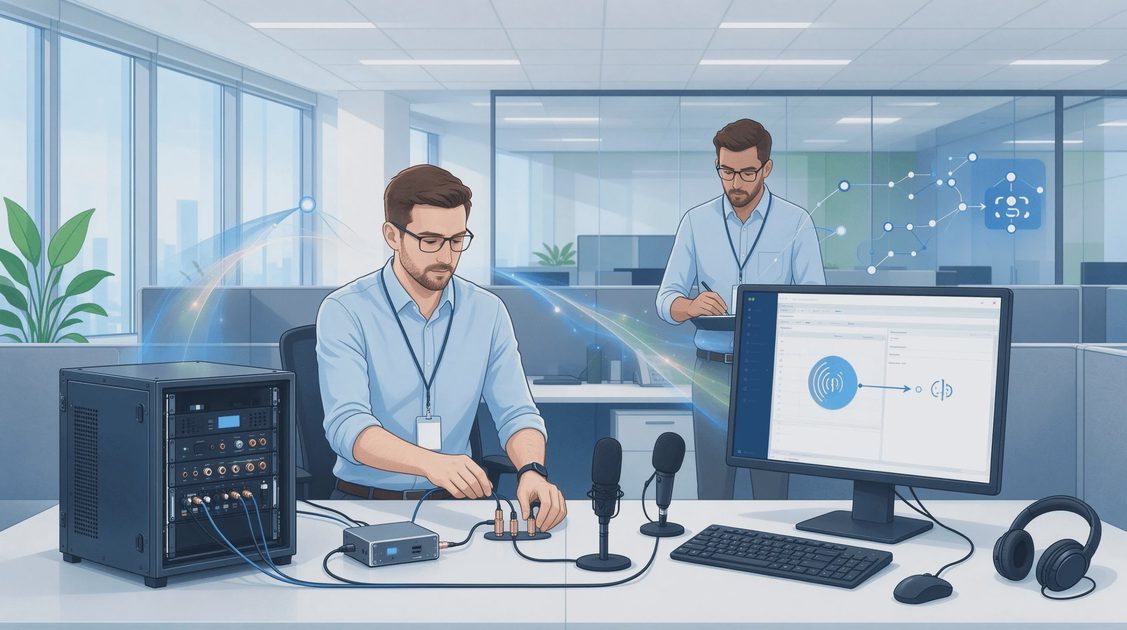
A Lightweight, Repeatable Weekly Review Practice
Once a week, scan releases, discussions, and announcements through four disciplined questions:
Does this change long-session stability, recovery after interruption, or accuracy under realistic noise and overlap?
Does it improve or complicate local, low-latency deployment and observability?
Does it alter privacy or retention defaults in ways that affect meeting, interview, or educational data?
Does it provide new measurement tools or evaluation sets that better match continuous, room-based use?
If the answer to all four is no, the item can be logged for awareness and otherwise ignored for operational purposes. This filter consistently separates signal from the larger volume of speech-AI noise.
Closing Observation on Disciplined Attention
The speech AI ecosystem produces far more announcements than actionable change for continuous transcription. Teams that maintain stable, room-survivable systems are those that filter weekly developments through the lens of latency under load, late-session behavior, recovery after interruption, privacy defaults, and local control. Audio8 ASR Infinite and similar systems improve when the surrounding stack improves on those axes—not when another clean short-form number is published.
The transcript still has to survive the room. Watching the week in speech AI is useful only when the watching itself is disciplined by that requirement.
No signals yet — transmit the first.