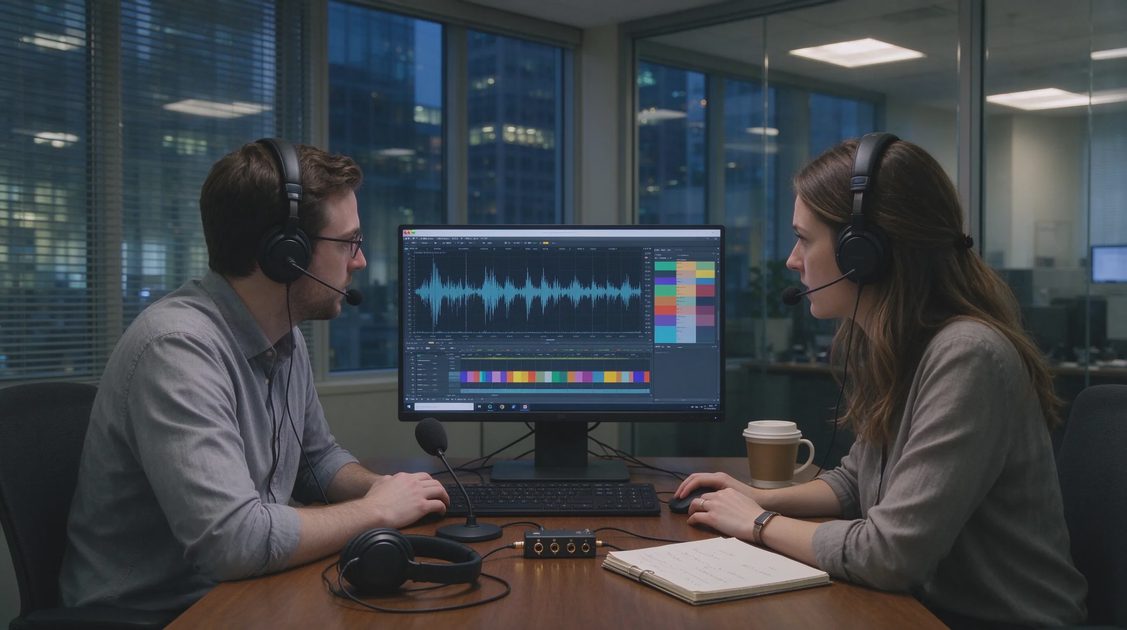
A transcript is only useful if it survives the room, and production readiness means surviving the room repeatedly, under varying conditions, with ordinary operators, without constant expert intervention. Audio8 ASR Infinite already delivers usable continuous transcription for teams that invest in careful microphone placement, monitoring, soft resets, and operational discipline. Wider adoption by more American teams requires closing a set of concrete, addressable gaps in evaluation, tooling, defaults, documentation, and hardware accessibility. This final article lists those gaps as clearly as the measurements and deployments in this series allow.
The list is not a demand for perfection or a claim that the system is unusable today. It is a practical inventory of the remaining friction that still keeps capable continuous systems from becoming routine infrastructure.
Evaluation and Measurement Gaps
Standardized Long-Session Continuous Benchmarks
Public evaluation still under-represents multi-hour continuous behavior, recovery after realistic interruptions, and insertion-rate trends over time. Broader production readiness needs shared, repeatable test protocols that include session lengths, acoustic conditions, and speaking styles matching real workdays, interviews, classrooms, and meetings. Until such protocols exist, every team must build and maintain its own private long-session set.
Latency Reporting Under Realistic Load
Decoding-time numbers without end-to-end streaming latency under concurrent load, realistic jitter, and production buffer settings leave the most important continuous variable opaque. Production teams need latency distributions and tail behavior, not only optimistic medians measured on quiet benches.
Error-Quality and Plausibility Assessment
Automated word error rate treats all mistakes as equal. Production users do not. Lightweight, repeatable methods for sampling plausible versus obvious errors—especially in late-session and high-overlap segments—would better predict real-world review cost and user trust.
Tooling and Operational Primitive Gaps
First-Class Soft Reset and Health Metrics
Soft reset that is fast (under three seconds), documented, and exposed as a core API, together with standard scrapeable health signals (end-to-end latency, sliding-window insertion rate, confidence, buffer depth, uptime), should be default rather than custom engineering. Many teams still implement these pieces themselves, raising the expertise barrier.
Dual-Path Live and Archival Support
Clean, low-friction separation of a low-latency live stream from a higher-latency, higher-quality archival or downstream-language-model path remains manual work in most stacks. Making this pattern trivial would eliminate a repeated source of back-pressure and configuration complexity.
Capture-Path Diagnostics and Guidance
Simple tools that detect clock drift, adaptive buffer growth, excessive front-end processing, and basic placement problems would prevent a large class of “the model is inaccurate” misdiagnoses that are actually capture-chain issues. Practical visual guidance for ordinary American rooms would further improve first-week success rates.
Readiness Gap | Current Typical State | What Would Lower the Barrier | Expected Impact on Adoption |
|---|---|---|---|
Long-session evaluation | Mostly short-form public sets | Shared multi-hour continuous protocols | Better prediction of real drift and recovery |
Latency under load | Often omitted or bench-only | End-to-end distributions under jitter and load | Fewer surprise lag complaints after deployment |
Soft reset + health metrics | Frequently custom-built | Standard, documented, fast primitives | Lower operational expertise required |
Privacy defaults | Often permanent or long retention | Short TTL + explicit write gates by default | Reduced retention risk and policy friction |
Capture diagnostics | Manual and expert-driven | Simple drift, buffer, and placement checks | Fewer mis-attributed accuracy problems |
Continuous runbooks | Sparse or absent | Explicit continuous failure-mode documentation | Faster operator response and higher trust |
Privacy and Default-Behavior Gaps
Safe Retention Defaults
Many systems still default to keeping transcripts indefinitely or for long periods. Production readiness for meeting, interview, and educational use requires short time-to-live defaults and explicit, logged decisions to retain more. Changing the default from “keep” to “expire unless justified” would remove a major source of cumulative risk.
Local Processing Friction
Local deployment is already possible and valuable for privacy, yet it still carries higher setup and maintenance cost than cloud APIs for many teams. Reducing that friction—through better packaging, clearer hardware guidance, and simpler health monitoring—without sacrificing transparency would expand the set of teams that can keep audio inside their own infrastructure.
Notice, Consent, and Policy Patterns
Reusable, lightweight patterns for notifying participants that continuous transcription is running, what will happen to the data, and how long it will be kept would lower both the social and the compliance barrier to adoption. Clear examples reduce the need for every organization to invent its own language.
Hardware Accessibility and Cost Gaps
Sustainable Local Inference Economics
Dedicated acceleration remains a meaningful cost and complexity item for small teams. Continued improvement in sustained throughput per watt, thermal design, and small-form-factor options would make always-on or frequent local continuous transcription realistic for a larger fraction of organizations.
Microphone and Room Guidance as First-Class Documentation
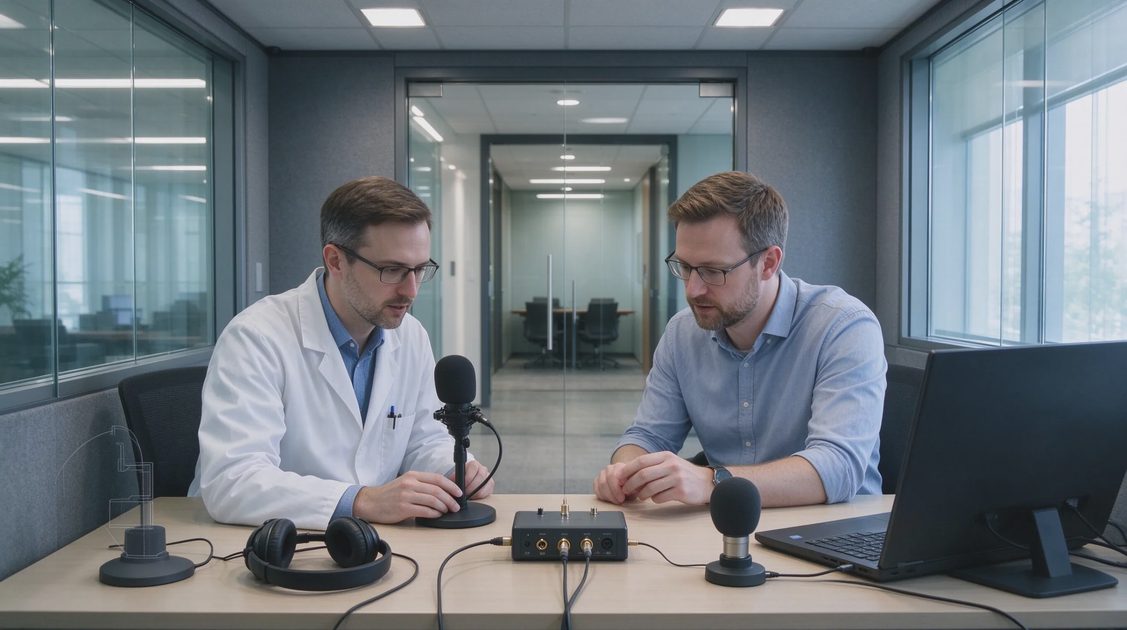
The repeated finding across this series that placement and capture quality often matter more than incremental model gains is still not reflected in most onboarding materials. Practical, visual, room-specific guidance for ordinary American homes, offices, and classrooms would improve outcomes more than many model updates.
Documentation and Operational Knowledge Gaps
Continuous-Specific Failure Modes and Runbooks
Documentation that covers only short-form accuracy leaves operators unprepared for late-session insertions, recovery behavior after overlap, thermal latency climb, and capture-path regressions. Production-ready systems need explicit continuous runbooks that describe symptoms, likely causes, and immediate mitigations.
Realistic Expectation Setting Alongside Capability Claims
Over-claiming “human-level,” “works everywhere,” or “no human review needed” produces disappointment and abandonment when overlap, noise, or specialized vocabulary inevitably create residual errors. Clear, prominent statements of where continuous systems still benefit from targeted human review increase long-term trust and reduce support burden.
Closing Inventory of High-Leverage Improvements
Shared long-session continuous evaluation protocols. Routine end-to-end latency reporting under load. Fast, standard soft-reset and health-metric primitives. Privacy-preserving retention defaults. Lower-friction local deployment packaging. Better capture-path diagnostics and room guidance. Continuous-specific operational documentation and runbooks. Honest, prominent limits alongside capability claims.
Audio8 ASR Infinite already survives many real American rooms well enough to be useful for teams willing to operate it with care. Closing the gaps listed above would make that usefulness routine rather than hard-won, and would allow a much larger set of developers, researchers, accessibility users, podcasters, and working teams to rely on continuous transcription without constant expert intervention.
The transcript still has to survive the room. Production readiness is simply the condition in which more teams can keep that survival repeatable, measurable, and sustainable as ordinary infrastructure rather than as a specialized project.

No signals yet — transmit the first.