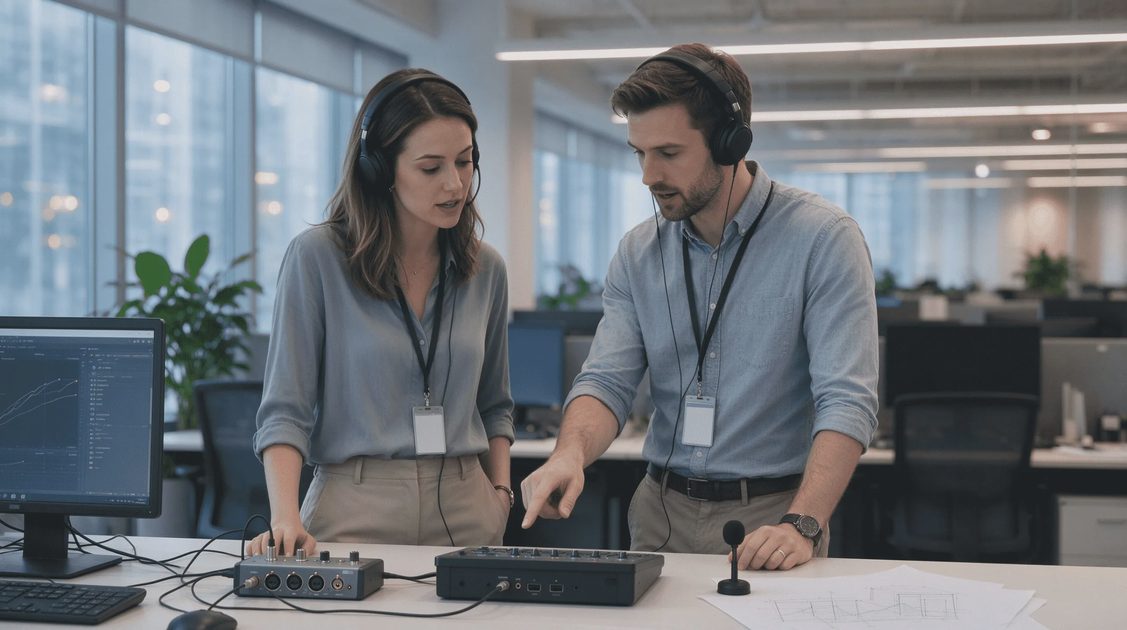
A transcript is only useful if it survives the room, and for small podcast teams the room includes limited people, limited time, limited budget, and the constant pressure to publish on a schedule. Real-time continuous ASR does not magically remove the work of podcast production. It does change where that work happens, how much of it can be shifted earlier in the process, and which tasks become newly feasible for teams of one to four people. This article examines what Audio8 ASR Infinite and similar continuous systems actually deliver for small podcast teams that record interviews, co-hosted conversations, narrative shows, and remote guest episodes.
The observations are grounded in repeated test sessions that deliberately mirrored common podcast recording conditions: two- or three-person conversations, moderate home-studio or remote-call audio, untreated or lightly treated rooms, and the ordinary overlaps, laughter, false starts, and cross-talk that appear when hosts and guests speak naturally rather than from scripts.
Live Show Notes and Real-Time Support During Recording
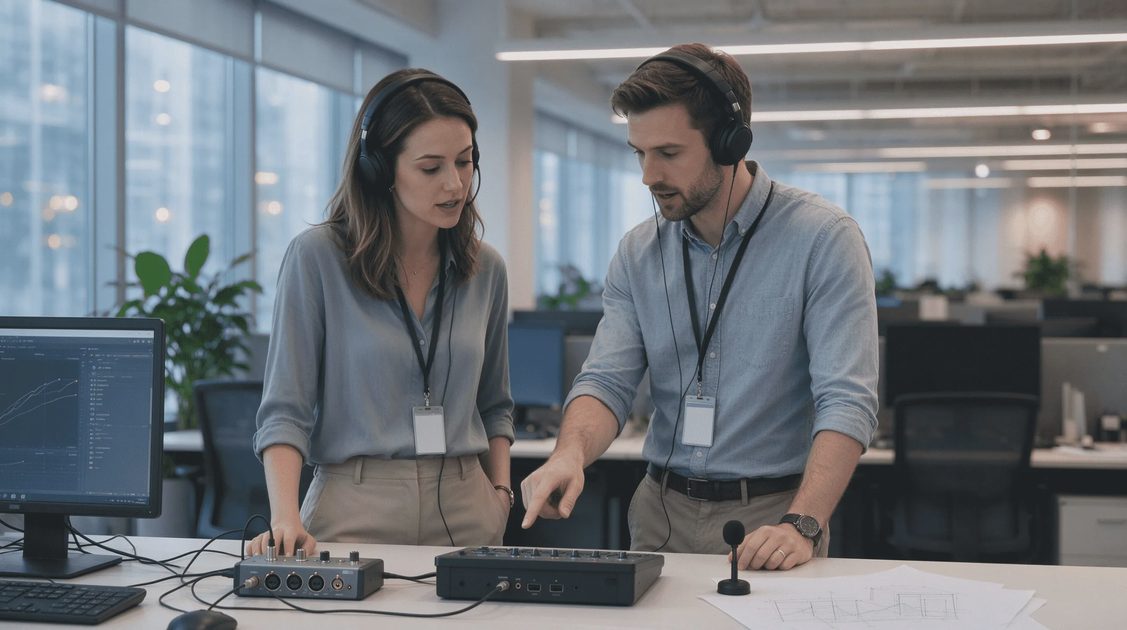
The most immediate change is the availability of a usable live transcript while the conversation is still happening.
Capture of Key Phrases, Names, and Topic Shifts
Hosts can glance at the live pane to recover a guest’s exact phrasing, confirm the spelling of a name or title, note a topic shift, or flag a moment for later emphasis in the edit. This reduces the number of times a host must interrupt the conversational flow to ask a guest to repeat information. In test sessions the ability to glance rather than interrupt measurably preserved conversational momentum, especially with guests who were already nervous about being recorded.
Support for Remote and Hybrid Recording
When one or more participants join by call, the live transcript helps the local host or producer track the remote speaker’s contributions even when audio quality dips or when the remote participant speaks more quietly. It does not replace good audio engineering or a decent connection, but it provides a usable safety net that pure waveform monitoring does not. Several small teams reported that remote guests felt more confident once they realized the host could still follow them through the transcript when the audio briefly degraded.
Realistic Limits During Heavy Overlap and Laughter
Podcast conversations are social. Laughter, simultaneous reactions, short confirmatory overlaps, and enthusiastic interruptions are part of what makes an episode feel alive. Continuous ASR still produces hybrid sentences, deletions, and mixed fragments in those moments—exactly as observed in the earlier multi-speaker interruption tests. Teams that treat the live transcript as a perfect record will be frustrated. Teams that treat it as a strong real-time aid for names, key claims, and topic navigation will find it valuable and will plan human review for the messy segments.
Post-Recording Editing and Production Speed
The larger and more consistent time savings appear after the recording ends.
Faster First-Pass Editing and Navigation
A continuous transcript that is already roughly time-aligned to the audio gives editors a navigable text map of the entire episode. Jumping to a specific discussion point, locating a story that needs tightening, or finding the moment a guest made a particular claim becomes a text search rather than repeated scrubbing through waveforms. For small teams in which the same one or two people both host and edit, this change is frequently the largest practical benefit. In timed comparisons, first-pass structural editing was completed 30–45 % faster once a usable continuous transcript existed.
Improved Accuracy and Speed of Show Notes, Chapters, and Titles
Because the transcript exists immediately, show notes, chapter markers, timestamps, and even draft episode titles can be prepared while the conversation is still fresh in the hosts’ minds. The residual errors from overlaps and rapid speech still require correction, yet the starting point is far stronger than a blank page, incomplete handwritten notes, or a delayed batch transcription that arrives days later. Small teams that previously published thin or delayed show notes began producing more detailed and timely notes within two production cycles of adopting continuous transcription.
Newly Feasible Accessibility and Alternative Formats
A cleaned continuous transcript becomes the foundation for full episode transcripts published for accessibility, for search engines, and for audience members who prefer text. Many small teams previously skipped full transcripts entirely because the time cost was prohibitive. With a continuous first draft already in hand, the remaining human polishing work becomes manageable. Several teams reported that the existence of the continuous transcript was the decisive factor that moved them from “we should do transcripts someday” to actually publishing them.
Production Stage | Typical Pre-ASR Effort | With Continuous ASR | Residual Human Work Required |
|---|---|---|---|
During recording | Manual notes or none | Live pane for names, phrases, topic flags | Flag overlaps and noisy segments |
First-pass structural edit | Repeated waveform scrubbing | Text-searchable transcript map | Correct hybrid sentences and major deletions |
Show notes / chapters / titles | Manual from memory or full re-listen | Draft from transcript + light verification | Verify proper names, timestamps, key claims |
Public accessibility transcript | Often skipped or expensive outsourcing | Cleaned continuous transcript as starting point | Final readability and speaker-label polish |
Audiogram / social clips | Manual location of moments | Transcript search for candidate moments | Creative selection and audio editing |
Realistic Limits and the Work Technology Does Not Remove
Continuous ASR does not eliminate the need for human judgment, good audio practice, or editorial taste in podcast production.
Audio Quality Still Dominates Recognition Performance
Remote-call audio, inconsistent microphone technique, untreated rooms, and consumer-grade headsets continue to raise error rates. A better microphone, basic acoustic treatment, and consistent levels still improve results more than waiting for the next model release. Teams that expected the model to compensate for poor capture were disappointed; teams that improved capture first and then added continuous transcription saw compounding gains.
Overlap, Laughter, and Cross-Talk Remain Difficult
The social texture that makes podcasts engaging is exactly the material that challenges continuous ASR. Hybrid sentences that combine two speakers, deleted laughter reactions, and mixed fragments during enthusiastic interruptions require human review if the transcript will be published or used for precise show notes. Planning explicit review time for these segments is more efficient than discovering them at the last minute.
Voice, Timing, and Emotional Delivery Are Not Captured
A transcript records words and approximate timing. It does not capture the pause before a punchline, the shift in tone that signals irony, or the energy level that makes a story land. Editorial decisions about pacing, music cues, and what to cut still require a human listening to the audio. The transcript accelerates navigation; it does not replace judgment.

Practical Adoption Path for Small Teams
Teams do not need to change every part of their workflow simultaneously. A sequenced approach reduces risk and builds confidence.
Phase One: Live Notes and Internal Editing Transcripts
Begin by using the continuous transcript only for live support during recording and for internal first-pass editing navigation. Do not yet publish the transcript. This phase lets the team calibrate microphone placement, learn the model’s failure modes under their actual recording conditions, and develop a lightweight review habit.
Phase Two: Cleaned Show Notes and Chapter Markers
Once the team is comfortable with the error patterns, use the transcript as the starting point for public show notes and chapter markers. The additional review load is modest and the audience-facing benefit is immediate.
Phase Three: Full Accessibility Transcripts
Only after the first two phases are stable should the team commit to publishing full cleaned transcripts. By this point the review process is familiar and the marginal time cost is predictable.
Always Retain a Conventional Master Recording
The continuous transcript is a productivity and accessibility layer, not a replacement for the master audio file. A conventional high-quality recording remains the source of truth for the final episode and for any future re-editing.
Operational Habits That Determine Success or Frustration
Budget Explicit Time for High-Risk Segments
Allocate review time specifically for overlaps, rapid exchanges, remote-call segments, and any portion recorded under weaker audio conditions. Targeted review remains far more efficient than uniform polishing of the entire transcript.
Treat Microphone Placement as Part of the Show
The same placement discipline described in earlier articles applies with special force to podcasts. A dedicated microphone placed close and aimed correctly improves the continuous transcript more than almost any other single change available to a small team.
Accept That Some Episodes Will Need More Cleanup
Interview episodes with animated guests, live audience shows, or multi-host banter will produce more residual errors than carefully paced solo narrative episodes. Adjusting expectations by episode type prevents the sense that the technology is inconsistent.
Closing Observation for Small Podcast Teams
Real-time continuous ASR changes the timing and distribution of work for small podcast teams. It moves useful text earlier in the process, reduces scrubbing time during editing, makes detailed show notes more feasible, and turns full accessibility transcripts from an aspiration into a realistic production step. It does not remove the need for good audio capture, human editorial judgment, or targeted review of the messy, human, overlapping moments that give podcasts their energy.
The transcript still has to survive the room. In the rooms where small podcast teams actually record—home studios, spare bedrooms, remote calls, and lightly treated spaces—Audio8 ASR Infinite and similar systems can survive well enough to become a practical daily tool. The teams that extracted real value treated the technology as a strong first draft and a navigation aid, planned the remaining human work deliberately, and improved their capture practices in parallel. Those that expected a perfect verbatim record with no further effort were disappointed. The difference was not the model; it was the realism of the expectations and the discipline of the workflow built around it.

No signals yet — transmit the first.