A transcript is only useful if it survives the room, and the room now includes a rapidly shifting open-weight and open-source speech ecosystem. New models, serving frameworks, evaluation sets, hardware options, and privacy tooling appear every few weeks. Most of the noise does not change the practical behavior of continuous transcription. Audio8 ASR Infinite sits inside that ecosystem as a continuous, low-latency system rather than a batch engine. This article maps the surrounding stack in detail and identifies the precise pieces developers should actively watch if they intend to keep continuous transcription stable, responsive, and private under real American professional and domestic conditions.
The perspective is operational rather than encyclopedic. It reflects the components that repeatedly affected latency, late-session insertion rates, recovery after interruption, and privacy exposure in the local and small-server deployments used throughout this series. The filter is simple: does the change improve or degrade survival in the room across multi-hour sessions?
Model Layer: Continuous Capability Versus Leaderboard Position
The model checkpoint is necessary but far from sufficient. Continuous systems are judged by failure modes that short-form benchmarks rarely capture.
Continuous-State Design and Long-Session Behavior
Most public evaluations still emphasize short segments or file-based transcription. Continuous systems reveal themselves through late-session insertion growth, recovery speed after silence or overlap, and the stability of partial hypotheses under streaming constraints. A model that leads a clean leaderboard can still accumulate plausible insertions after sixty to ninety minutes of ordinary conversational audio. Developers should treat multi-hour continuous behavior as a first-class evaluation criterion and maintain private test sets long enough to surface that behavior.
Open-Weight Versus Fully Reproducible Pipelines
An open-weight model that still requires proprietary serving components, closed post-processing, or restrictive runtime licenses creates different operational and legal risk than a fully reproducible pipeline. Audio8 ASR Infinite’s local deployability is valuable precisely because it can sit inside a controlled, inspectable stack. Watch for licensing updates, new mandatory cloud features, or dependency changes that quietly re-introduce external control or data exposure.
Specialization, Training Distribution, and Domain Match
Models tuned primarily on clean read speech or narrow domains behave differently from models exposed to conversational, accented, noisy, and overlapping American speech. Continuous transcription in workplaces, homes, and interviews favors broader conversational coverage. When release notes omit clear description of training and evaluation distributions, treat headline accuracy numbers as incomplete for room-survival decisions.
Partial-Hypothesis Quality and Revision Behavior
Streaming systems emit partial results that later revise. The frequency and visibility of those revisions affect felt usability more than final word error rate alone. Models and decoding configurations that produce excessive flicker under rapid or repaired speech increase cognitive load for live users even when the eventual transcript is accurate.
Serving and Runtime Layer
How the model is served determines whether theoretical latency becomes the delay users actually feel.
Streaming-Native Runtimes and State Management
Batch-oriented serving stacks add friction and hidden queues for continuous use. Prefer runtimes that natively support streaming input, low-overhead partial results, and explicit continuous-state management. Soft-reset capability that completes in under three seconds and clean exposure of health metrics should be treated as required features, not optional engineering projects.
Resource Isolation, Memory Headroom, and Thermal Reality
Consumer and small-server GPUs under sustained continuous load throttle and add fan noise that itself becomes part of the acoustic environment. Serving configurations that ignore thermal design and memory headroom produce the late-session latency climb documented in earlier tests. Runtime updates that change default batching, memory allocation, or scheduling behavior can silently alter multi-hour stability; re-validate after every material runtime change.
Observability as a Core Requirement
End-to-end latency, insertion rate over a sliding window, average confidence, buffer depths, and process uptime must be exposed and easy to scrape. Without these signals, continuous systems fail silently and operators discover problems only after users lose trust. Frameworks that bury or omit these metrics increase operational risk for any team running multi-hour sessions.
Dual-Path Live and Archival Support
Many deployments need both a low-latency live stream for immediate display and a higher-latency, higher-quality path for archival or downstream language-model use. Runtimes that make this separation trivial reduce back-pressure and complexity. When the pattern requires custom engineering, it becomes a recurring source of latency regressions.
Stack Component | High-Relevance Signal to Watch | Why It Matters for Continuous Use | Practical Failure Mode if Ignored |
|---|---|---|---|
Model | Multi-hour stability, training data mix, recovery | Late insertions, poor overlap handling | Rising insertion rate after 60+ min |
Serving runtime | Streaming support, soft reset, health metrics | Felt latency and recoverability | Missing metrics or slow/broken reset |
Evaluation practice | Conversational + noisy + long-session sets | Benchmark mismatch with real rooms | Clean WER but poor field performance |
Hardware / drivers | Sustained throughput, thermal design, clock stability | Latency climb, underruns, fan noise | Thermal throttle + acoustic interference |
Privacy / retention | Local processing defaults, TTL controls, write gates | Data exposure and policy risk | Default permanent storage of meeting audio |
Evaluation and Measurement Practices
Public benchmarks remain useful reference points but are systematically incomplete for continuous decisions.
Short-Form Scores Versus Room Survival
A model that ranks first on a clean, short public set can still drift under continuous load or degrade under HVAC, kitchen noise, and overlap. Developers should maintain a private evaluation set that reflects their actual acoustic conditions, regional American speech patterns, session lengths, and overlap density. Even forty to sixty minutes of carefully chosen real audio provides a stronger decision signal than an unmatched leaderboard.
Latency as a First-Class Continuous Metric
Word error rate without end-to-end streaming latency under realistic chunking and load is only half the picture. Track latency distributions, not only optimistic medians on quiet benches. The 120 ms felt-latency zone used throughout this series is a practical reference for conversational use; other targets may be appropriate for archival paths.
Human Review of Plausible Errors
Automated metrics understate the cost of insertions that sound plausible. Periodic human sampling of late-session and high-overlap segments remains essential for any deployment that treats the transcript as more than a rough draft. Benchmarks that never examine error quality leave this cost invisible.
Hardware, Privacy, and Deployment Signals
Local Versus Cloud Trade-Offs and Shifting Economics
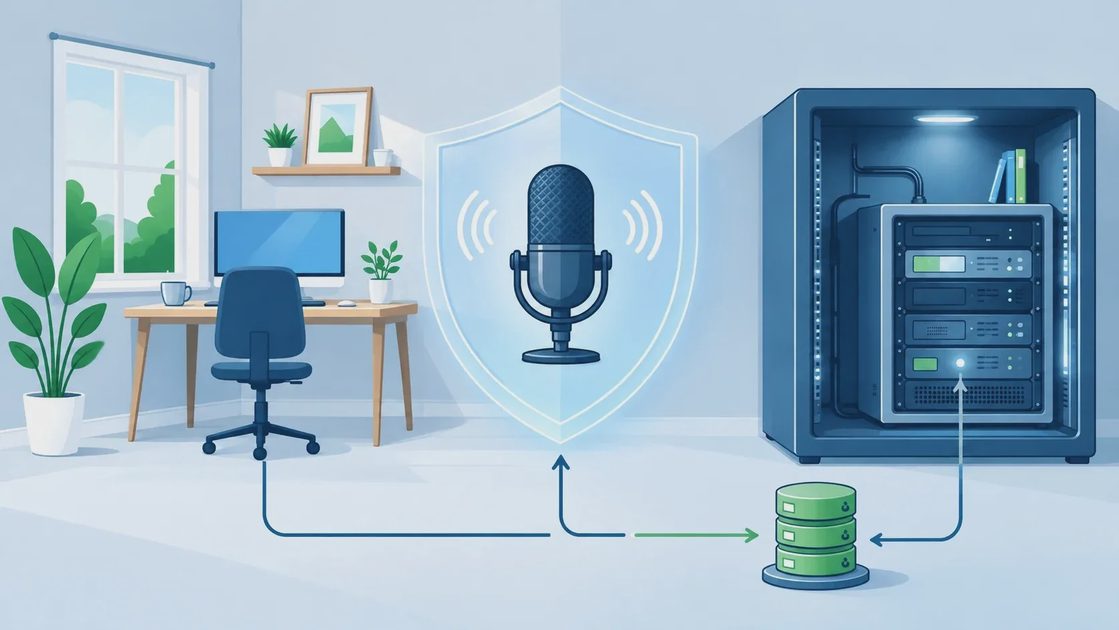
Local deployment of Audio8 ASR Infinite keeps audio inside the building and removes network round-trips. Cloud options may offer newer model variants or easier scaling. Watch for changes in cloud data-handling policies, pricing of sustained inference, and local hardware improvements that alter the cost and privacy balance.
Privacy Tooling Maturity
Short time-to-live buffers, explicit write gates, audit logs for retention decisions, and easy local-only modes are still uneven across the stack. Teams handling meeting and interview data should treat privacy controls as core infrastructure rather than optional add-ons. Improvements in these tools are often more actionable than high-level model releases.
Driver, OS, and Audio-Path Stability
Clock drift, adaptive buffering, and USB audio quirks repeatedly introduced latency and underruns in testing. Operating-system and driver updates can quietly change behavior. Re-validate the entire capture path after major system updates; otherwise capture regressions are routinely mis-attributed to the model.
What Developers Should Actively Monitor
Prioritize long-session continuous evaluation over isolated short-form scores. Demand streaming-native serving with fast soft reset and clear, scrapeable metrics. Maintain a private test set that matches real American rooms, accents, and speaking styles. Treat privacy and retention controls as first-class stack components. Re-measure end-to-end latency and insertion rate under multi-hour load after every material change in model, runtime, hardware, or audio stack. Watch licensing and dependency changes that affect local control.
The open speech stack will continue to move quickly. The teams that keep continuous transcription reliable are those that filter the movement through the lens of room survival—latency under load, late-session behavior, recovery after interruption, and privacy defaults—rather than through leaderboard position alone.
The transcript still has to survive the room. Watching the stack is useful only when the watching is disciplined by that requirement. Audio8 ASR Infinite already demonstrates that continuous, low-latency local transcription is practical; the surrounding ecosystem determines how many teams can keep it practical without constant expert intervention.

No signals yet — transmit the first.